
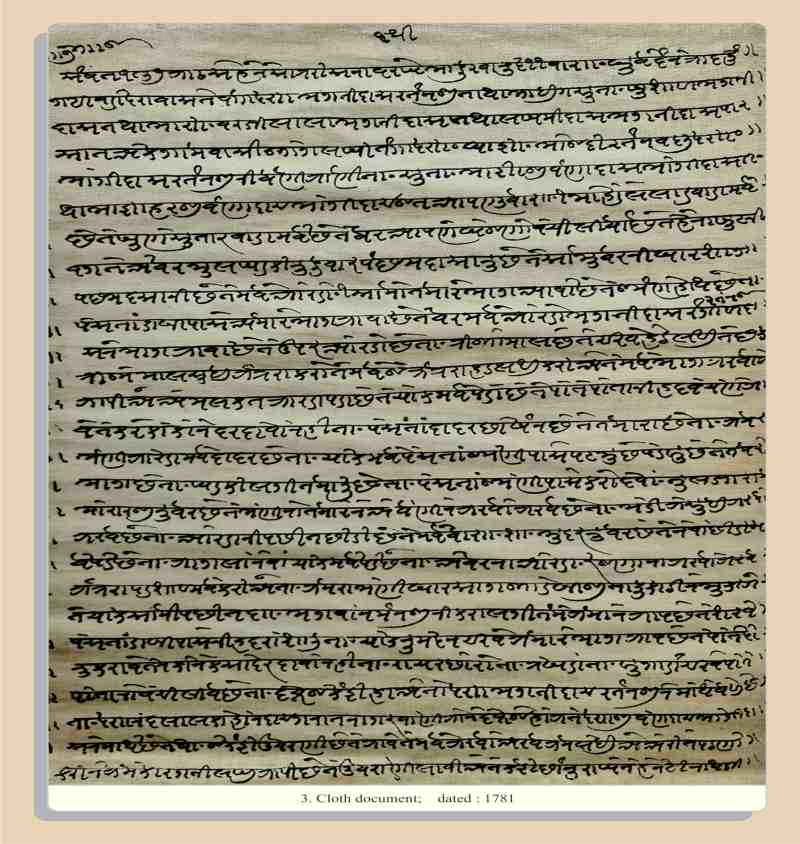
Cloth Manuscript
Cloth manuscripts represent a rare and remarkable tradition of record-keeping, in which information related to real estate was meticulously handwritten on fabric typically cotton or khadi. Dating from the late 18th to early 20th centuries, these manuscripts reflect a unique archival practice that blends practicality with artistry.
Primarily used to document land ownership, legal agreements, property transfers, and adoption documents. These cloth records were valued for their durability especially in humid climates where paper often deteriorated. Their lasting quality ensures the preservation of vital records over generations.
Written in black ink derived from natural sources, many of these manuscripts remain legible even today, a testament to both the skill of the scribes and the quality of the materials used.
The Haribhakti family, renowned Sahukars (financiers) of the Baroda State in the 18th century maintained an extensive collection of these cloth records within their property archives. These documents provide a valuable glimpse into the legal, economic, and social dynamics of the time, illustrating how property was owned, inherited, and regulated.
Though legal documentation today is written and digitized, these cloth manuscripts continue to inspire historians and archival scholars. Positioned at the intersection of law, art, and legacy, they serve as enduring examples of the creativity and cultural richness embedded in India’s traditional record-keeping systems.