
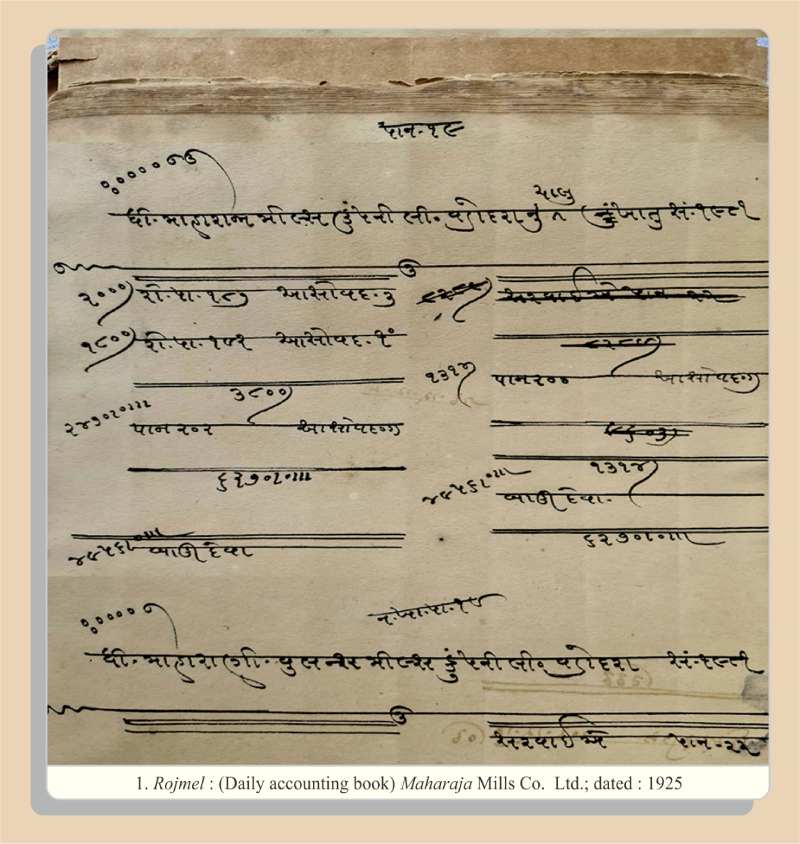
Bahi Manuscript
Bahi (ledger book) is a traditional tool used to record financial transactions. The Bahi-Khata a form of account book has gradually evolved into the modern double entry system, laying the foundation of contemporary accounting practices. Separate bahis are maintained for daily, weekly, fortnightly, monthly, and yearly transactions.
Across India, particularly in Gujarat and Rajasthan, businessmen begin the financial new year by worshipping Devi Laxmi, the Goddess of Prosperity, seeking her blessings for wealth and success. On this auspicious day, new account books are inaugurated, often wrapped in red cloth or bound in leather and maintained throughout the year.
“Our archives proudly safeguard a treasure of history. The oldest known Bahi manuscript in our collection dates back to 1792 CE. It offers a glimpse into the past through fiscal records that reflect economic potential, social structure, and cultural ethos.”
The Bahi-Khata system represents a time-honored approach to bookkeeping, with roots tracing back nearly 2,000 years. These traditional notebooks are known for their distinctive craftsmanship, forming clear columns for “Naam” (debits) and “Jama” (credits).
The Haribhakti family State Financiers to the Gaekwad State of Barod played a pivotal role in preserving and advancing this tradition. As prominent bankers and traders, they meticulously maintained records using the Bahi-Khata system. Today, many of these financial ledgers are housed in the Ishwar Haribhakti Archives, a personal collection dedicated to preserving the business heritage of the family. These manuscripts stand as a testament to the enduring relevance of traditional Indian bookkeeping practices.
Bahi-Khata manuscripts are bound in fabric or leather using a distinctive hand-woven stitch perfected over centuries for durability and flexibility. The materials paper, ink, cloth, or leather reflect trade linkages across the region. Each scribe added their unique flair, making every folio distinct.
Despite the rise of digital accounting, the Bahi-Khata tradition remains alive in markets today, seamlessly blending faith, heritage, and commerce.