
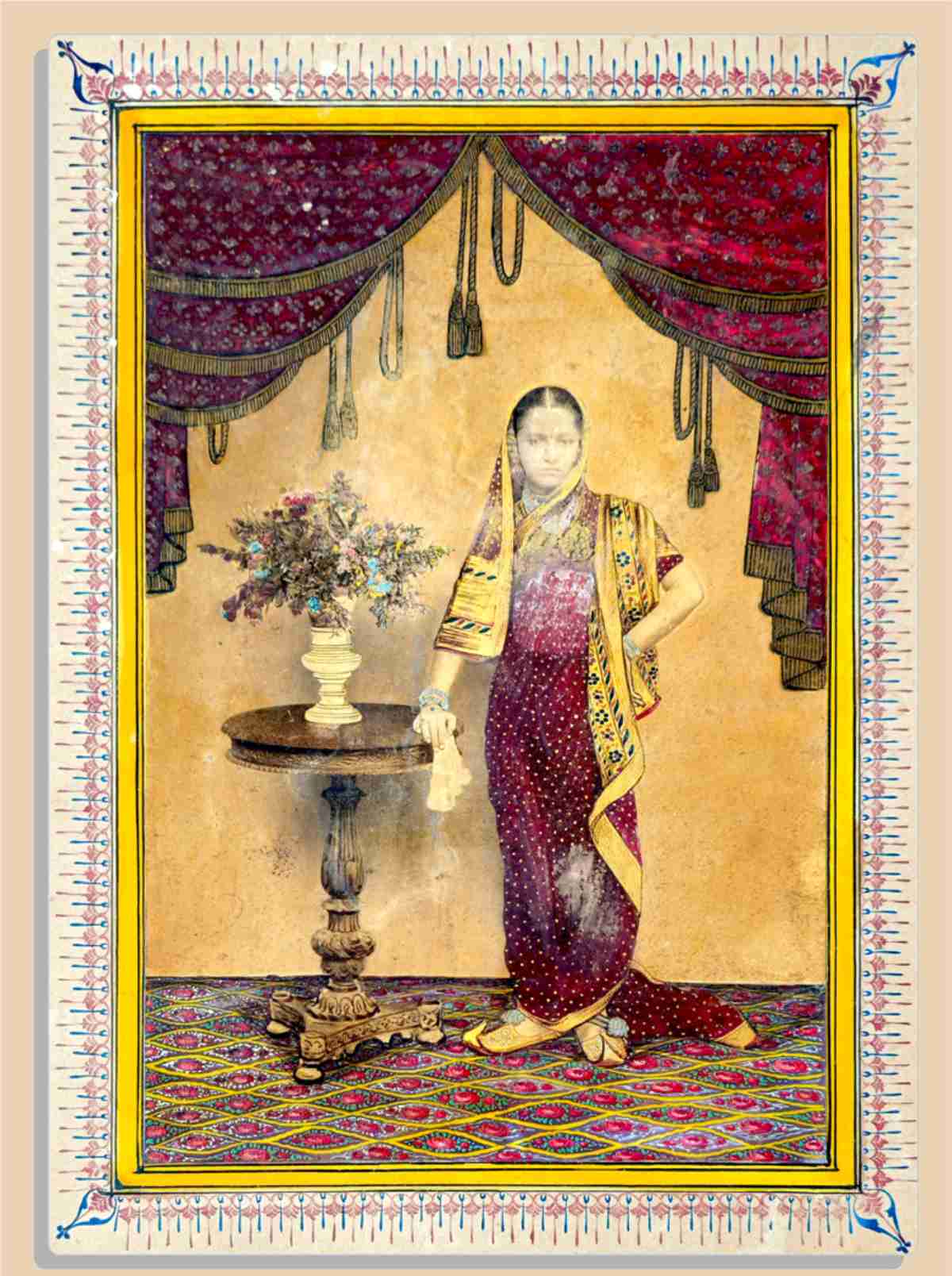
Ratanbai
Ratanbai was like a rose: graceful, passionate, energetic, and graceful. The pillars of the family ~ Haribhai and Bhaktidas died in the year 1796 & 1795 respectively. Bhaktidas’s widow Ratanbai, who was familiar with the workings of the firm, took over the entire administration of the firm.
Haribhai’s two wives, former Dudhibai and later Jivkorbai, had simple personalities, and were not interested in the workings of the firm, so they gave full support to Ratanbai. At a time when women lived behind veils and considered their whole world within the four walls of the house, Ratanbai maintained her tradition, and managed the firm, and the family effectively and systematically by winning the trust of the moneylenders, the Peshwa Government, the Gaekwad Government, and the British bureaucrats. She proficiently handled pedhi’s overall management.
From 1796 to 1803, she expanded the family business. She nurtured the family’s extensive trade with the help of Samaldas in Baroda and Dullabhdas in Pune. She actively participated in politics too. Haribhai and Bhaktidas’s nephew, Dullabhdas being well-informed in the Pune firm, retained the right to manage the firm there, as a representative. He ran it satisfactorily for three years, but then declared himself Haribhai’s heir, and usurped the Pune property. After this, Bhaktidas’s widow, Ratanbai, took her nephew Samaldas with her, and went to check the accounts of the firm in Pune from Dullabhdas. She succeeded well and took possession of her property. On 5 December, 1803, Ratanbai adopted her nephew Samaldas, after obtaining the approval of the Shrimant Peshwa government.Despite the societal restrictions that Indian women faced, Ratanbai Haribhakti, Bhaktidas’s wife, handled the family business with proficiency and expanded it from 1796 to 1803.